Southern California's dry climate creates a false sense of security around commercial waterproofing. Because it doesn't rain for months at a time, roof membranes, below-grade waterproofing, and building envelope seals can fail quietly, with the damage only surfacing once a storm actually hits. For property owners across Pasadena and Los Angeles County, proactive waterproofing is dramatically cheaper than reactive water-damage repair.
Where Commercial Buildings Actually Leak
Water intrusion on commercial properties rarely happens through an obvious hole in the roof. The most common failure points are roof penetrations around HVAC units and vents, parapet wall caps, window and door flashing, and below-grade waterproofing at foundation walls and planter boxes built against the structure. Each of these requires a different waterproofing system, which is why a generic patch job often fails within a single storm season.
Roof Membrane Systems for Flat and Low-Slope Commercial Roofs
Most commercial buildings in the Los Angeles area use flat or low-slope roofing, which relies entirely on membrane integrity rather than gravity to shed water. UV degradation from year-round sun exposure is the primary cause of membrane failure here, well before the material reaches its rated lifespan. A waterproofing inspection should assess membrane flexibility, seam integrity, and drainage slope, not just look for standing water after the fact.
Below-Grade and Foundation Waterproofing
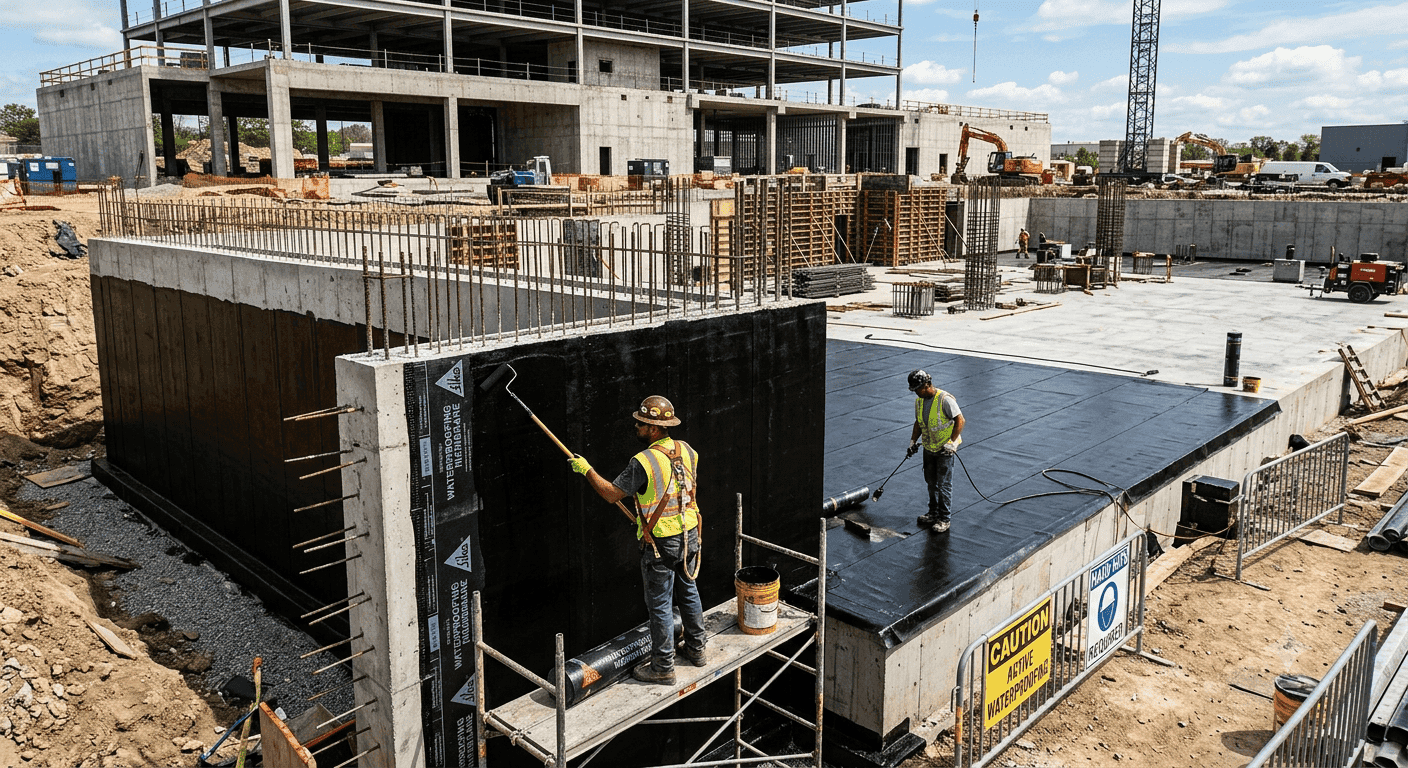
Parking structures, basements, and below-grade commercial spaces depend on waterproofing membranes and proper drainage systems installed at the foundation level. Once water finds its way behind a below-grade wall, the fix is significantly more invasive and costly than the original waterproofing installation would have been — which is why this scope is best addressed proactively during any structural remodel or addition, not deferred until a leak appears.
Seasonal Timing: Why Late Summer and Early Fall Matter Most
The ideal window to waterproof a commercial building in the Los Angeles area is before the first significant rain event of the season, typically in late summer or early fall. Waterproofing membranes and coatings need dry conditions and adequate cure time, which becomes difficult to guarantee once the rainy season begins.
A Waterproofing Inspection Is Cheaper Than a Repair
For property owners across Pasadena, Los Angeles, and the surrounding San Gabriel Valley, an annual waterproofing inspection of the roof membrane, parapet caps, and any below-grade areas is the most cost-effective maintenance item on a commercial building's calendar — far less expensive than remediating water damage, mold, or structural deterioration after a leak has already taken hold.